
Pixel 11 Pro Computational Photography vs iPhone 18 Pro Max: Software vs Hardware
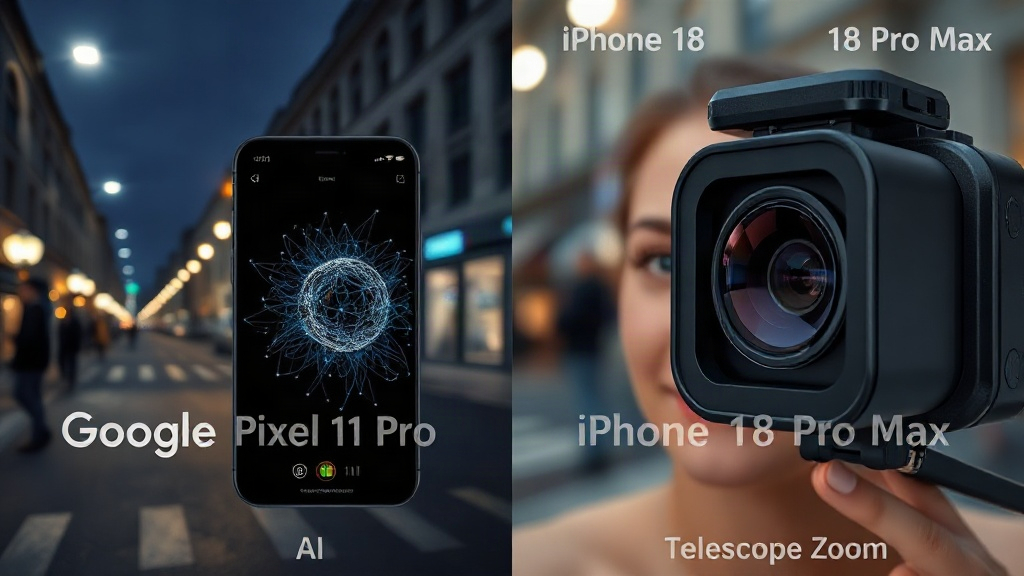
Pixel 11 Pro Computational Photography vs iPhone 18 Pro Max: Which Reigns Supreme?
The smartphone photography landscape continues to evolve, with Google and Apple taking distinctly different approaches to image quality. The expected Pixel 11 Pro emphasizes computational photography—leveraging Google's advanced software and AI—while the iPhone 18 Pro Max reportedly doubles down on premium hardware components. But can software truly outperform hardware?
Understanding Computational Photography
Google has built its reputation on computational photography, a technique that uses machine learning and advanced algorithms to enhance images after capture. The Pixel 11 Pro is expected to push this technology further with:
- AI-driven scene recognition: Automatically identifying subjects and adjusting processing accordingly
- Multi-frame fusion: Combining multiple exposures to enhance detail and reduce noise
- Real-time HDR+: Improved dynamic range without manual intervention
- Generative Fill: Content-aware editing powered by AI models
- Enhanced Night Mode: Superior low-light performance through algorithmic processing
iPhone 18 Pro Max Hardware Advantage
Apple's approach focuses on premium imaging hardware combined with proprietary processing. The iPhone 18 Pro Max is reported to feature:
- Advanced sensor technology: Larger pixels and improved quantum efficiency for better light capture
- Enhanced optical systems: Premium lenses with improved coatings and stabilization
- Titanium-reinforced periscope lens: Providing superior zoom capabilities
- 8K video recording: Capturing more visual information at higher framerates
- Real-time processing chip: Dedicated hardware for immediate image enhancement
The Software vs Hardware Showdown
Low-Light Photography
Google's Pixel series has long excelled in low-light situations through advanced night mode. The expected Pixel 11 Pro would likely continue this tradition by processing multiple frames intelligently. However, the iPhone 18 Pro Max's reported larger sensors could capture more light inherently, reducing the processing burden and potentially delivering faster results with less computational overhead.
Portrait Mode and Depth
Both devices handle portrait photography differently. The Pixel 11 Pro would use machine learning for subject detection and background blur simulation, while Apple's rumored dual-camera system with enhanced LiDAR sensors provides true depth mapping. The iPhone 18 Pro Max's hardware approach may deliver more accurate depth information, particularly with complex scenes or hair detection.
Zoom Quality
The reported periscope lens on the iPhone 18 Pro Max offers optical zoom advantages that computational photography cannot fully replicate. While the Pixel 11 Pro's Super Resolution and AI upscaling would improve digital zoom, optical zoom still captures more original data, providing superior detail at distance.
Video Stability and Quality
Hardware stabilization on the iPhone 18 Pro Max combined with sensor-shift technology provides smooth video. The Pixel 11 Pro would compensate with algorithmic stabilization and frame interpolation, but hardware solutions typically deliver more responsive, natural-looking results for video work.
The Verdict: Which Wins?
Rather than a clear victor, these phones represent complementary approaches:
Choose the Pixel 11 Pro if you:
- Prefer computational power and AI-driven enhancements
- Want exceptional everyday photography with minimal manual adjustment
- Value Google's proven night mode and HDR processing
- Enjoy generative AI features for editing flexibility
- Appreciate software innovation over hardware specs
Choose the iPhone 18 Pro Max if you:
- Require professional-grade hardware capabilities
- Prioritize optical zoom and telephoto performance
- Film videos professionally and need advanced stabilization
- Want predictable, consistent results without AI variation
- Value optical performance over computational tricks
Real-World Performance Expectations
For most users, the difference between these approaches is less dramatic than specifications suggest. Both devices would produce excellent photos in ideal lighting. The Pixel 11 Pro might edge ahead in challenging indoor lighting with its computational prowess, while the iPhone 18 Pro Max likely maintains superiority in professional video and telephoto scenarios.
The computational photography advantage isn't infinite—there's a limit to what software can extract from limited sensor data. Conversely, hardware alone without intelligent processing can produce flat, uninspiring images. The best approach combines both, and both manufacturers now implement hybrid strategies.
Buying Advice for Photography Enthusiasts
If photography is your primary concern: Consider your typical shooting scenarios. Do you shoot mostly in variable lighting with everyday subjects (Pixel 11 Pro advantage)? Or do you need reliable zoom, video, and professional capabilities (iPhone 18 Pro Max advantage)?
Software updates matter: Google's Pixel phones receive extensive feature improvements through software updates. A Pixel device can improve photographically over time, while hardware remains static. Factor in the device's lifecycle when deciding.
Test before buying: Visit retailers and compare samples. Photography preferences are subjective—what the technical specifications favor might not match your visual preferences.
Looking Forward
The computational photography vs. hardware debate will likely converge. Future flagship phones from both companies will increasingly blend optimized sensors, dedicated processing chips, and advanced AI. The Pixel 11 Pro and iPhone 18 Pro Max represent the current peak of each philosophy, but the future belongs to devices that master both.
Disclaimer: Information about the unreleased Pixel 11 Pro is based on expectations and industry reporting. Specifications and capabilities have not been officially confirmed by Google. Features described for the iPhone 18 Pro Max are rumored specifications. Actual products may differ from expectations.
Frequently Asked Questions
Does computational photography actually beat hardware improvements?
It depends on the scenario. Computational photography excels in controlled environments and everyday shooting, while hardware advantages shine in professional video, zoom, and challenging conditions. Modern flagships combine both approaches for optimal results.
Will the Pixel 11 Pro's software outperform the iPhone 18 Pro Max's hardware?
Both approaches have strengths. The Pixel 11 Pro's software would likely deliver superior low-light and HDR performance, while the iPhone 18 Pro Max's hardware would probably excel in telephoto and video work. 'Better' depends on your specific needs.
Can Google's AI make up for smaller camera sensors?
To a point, yes. Computational photography can enhance limited sensor data significantly, but there's a physical limit. A smaller sensor captures less light information—software can optimize what's there, but can't create data that doesn't exist.
Which phone takes better portraits?
The iPhone 18 Pro Max's rumored LiDAR and dual-camera system offers more accurate depth mapping, while the Pixel 11 Pro's AI-driven subject detection is exceptional. Both should produce excellent portraits in different ways.
How important is 8K video for most users?
For professional content creators, very important. For casual users, 4K at 60fps is typically sufficient. Storage and editing requirements for 8K are substantial, so consider practical needs before prioritizing this feature.
Do Pixel phones improve photographically after purchase?
Yes, Google regularly enhances computational photography through software updates. iPhones receive improvements too, but Pixel devices often see more dramatic photography-focused feature additions.
Should I wait for the Pixel 11 Pro if I primarily want better photos?
If computational photography matters most and you can wait, possibly. If you need a phone now and appreciate iPhone's ecosystem, the iPhone 18 series is also excellent. Your actual shooting needs matter more than theoretical specifications.
How do these phones compare to professional cameras?
Modern flagships rival entry-level mirrorless cameras for stills in ideal conditions. Professional cameras maintain advantages in lens variety, manual controls, and performance in extreme conditions, but for most users, these phones are excellent alternatives.
Community
Camera samples
No community photos yet for this article. Be the first to share one.
Discussion
Comments
No comments yet. Be the first to share your thoughts.