
iPhone 18 Pro Max Ceramic Shield 2.0 vs Galaxy S26 Ultra Armor Glass: Durability Comparison
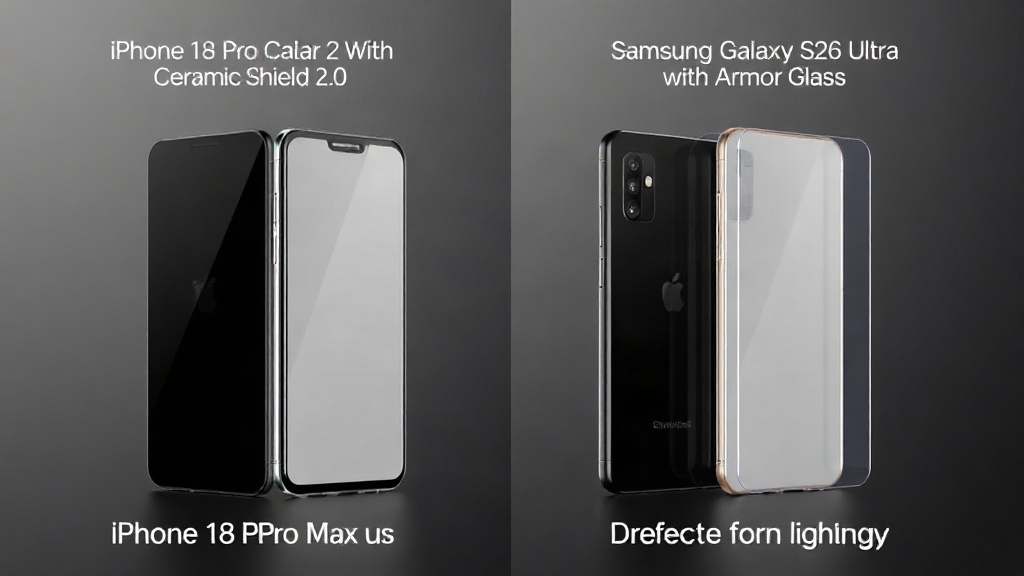
iPhone 18 Pro Max Ceramic Shield 2.0 vs Galaxy S26 Ultra Armor Glass: Which Offers Superior Durability?
As we head into 2026, flagship smartphones continue to evolve with increasingly sophisticated protective technologies. Two of the most anticipated devices—the rumored iPhone 18 Pro Max and Samsung's Galaxy S26 Ultra—are expected to feature next-generation glass formulations designed to withstand drops, scratches, and daily wear. Understanding the differences between these technologies can help you make an informed purchasing decision.
Understanding Ceramic Shield 2.0: Apple's Expected Upgrade
Apple's original Ceramic Shield technology, introduced with the iPhone 12 Pro, revolutionized smartphone protection by embedding ceramic crystals into glass. The expected Ceramic Shield 2.0 is rumored to build on this foundation with an enhanced crystal density and improved bonding matrix.
Reported improvements in Ceramic Shield 2.0 may include:
- Higher micro-hardness ratings for improved scratch resistance
- Enhanced shatter resistance from drop impacts
- Improved oleophobic coating for better fingerprint resistance
- Potentially better optical clarity compared to the previous generation
Industry analysts predict that Ceramic Shield 2.0 could achieve durability ratings that make it one of the most robust smartphone glasses on the market. However, these specifications remain unconfirmed until Apple's official announcement.
Galaxy S26 Ultra Armor Glass: Samsung's Competitive Response
Samsung has traditionally focused on its own proprietary glass formulations, and the expected Galaxy S26 Ultra Armor Glass represents the company's response to premium durability demands. This material is rumored to feature a multi-layer construction designed to distribute impact forces more effectively.
Anticipated features of Armor Glass may include:
- Multi-layered construction for superior shock absorption
- Enhanced tensile strength to resist bending stress
- Improved adhesion to the underlying frame materials
- Potential water and oil repellent properties
Samsung's approach historically emphasizes practical durability through engineering optimization rather than material science alone. The Galaxy S26 Ultra's Armor Glass is expected to reflect this philosophy.
Durability Rating Comparison
When comparing protective technologies, several metrics matter:
Drop Test Performance
Both devices are expected to undergo rigorous drop testing on various surfaces. The iPhone 18 Pro Max is rumored to achieve drop protection from heights exceeding 2 meters onto ceramic and concrete surfaces. Samsung's Armor Glass is similarly predicted to handle comparable drop scenarios, though specific heights haven't been officially announced.
Scratch Resistance
Measured on the Mohs hardness scale, premium smartphone glass typically ranks between 8-9. Ceramic Shield 2.0 is expected to maintain Apple's competitive advantage in this area, potentially rating slightly higher than Armor Glass in controlled scratch tests.
Impact Strength
The energy absorption capability during impacts differs between technologies. Ceramic-based solutions like Apple's are rumored to excel at localizing damage, while multi-layer constructions like Samsung's may distribute force more broadly to prevent catastrophic failure.
Real-World Durability Considerations
Laboratory ratings don't always translate directly to everyday use. Consider these practical factors:
Everyday Drop Scenarios
Both the iPhone 18 Pro Max and Galaxy S26 Ultra are expected to handle typical pocket-to-ground drops with minimal damage. However, edge impacts and angled drops may produce different results depending on the frame material and shock absorption design of each device.
Scratching from Daily Use
Keys, coins, and sand particles present consistent challenges for any glass protection. Both expected technologies should provide excellent scratch resistance, though the oleophobic coatings may degrade at different rates.
Dust and Environmental Resistance
Fine particles can compromise protective coatings over time. Both devices are expected to maintain high dust resistance ratings, particularly with their sealed designs.
Buying Advice: Which Should You Choose?
Choose the iPhone 18 Pro Max if:
- You prioritize scratch resistance and optical clarity
- You prefer Apple's ecosystem and software integration
- You value proven track records with existing Ceramic Shield implementations
- You're willing to pay premium prices for cutting-edge materials
Choose the Galaxy S26 Ultra if:
- You prefer Samsung's Android customization and feature set
- You want a device with proven multi-layer protection engineering
- You value practical durability over material science specifications
- You seek alternative ecosystem benefits and services
General Durability Recommendations:
- Regardless of which device you choose, invest in a quality protective case for drops
- Use a screen protector if you're concerned about scratches
- Avoid subjecting either device to extreme temperature changes
- Clean the glass regularly with appropriate materials to maintain oleophobic coatings
- Consider device insurance for accidental damage protection
The Verdict
Based on expected specifications and industry trends, neither device is definitively superior in durability. The iPhone 18 Pro Max Ceramic Shield 2.0 is rumored to offer a slight edge in scratch resistance, while Samsung's Armor Glass may excel in multi-directional impact protection. Real-world durability depends more on how you use and protect your device than on marginal differences between these premium technologies.
Both flagships are expected to represent the pinnacle of smartphone protection in 2026. Your choice should ultimately depend on your preference for the overall device ecosystem, features, and software experience rather than durability alone, as both are anticipated to exceed industry standards.
Disclaimer: Information about the iPhone 18 Pro Max and Galaxy S26 Ultra, including their Ceramic Shield 2.0 and Armor Glass technologies, is based on industry rumors, predictions, and analyst reports. These specifications and features have not been officially confirmed by Apple or Samsung. Actual specifications may differ significantly from expectations. Please refer to official announcements for confirmed information.
Frequently Asked Questions
Is the iPhone 18 Pro Max Ceramic Shield 2.0 officially confirmed?
No, the iPhone 18 Pro Max and its Ceramic Shield 2.0 technology are not officially confirmed by Apple. All information is based on industry rumors and predictions. Please wait for Apple's official announcement for confirmed specifications.
What is Ceramic Shield 2.0 and how does it differ from the original Ceramic Shield?
Ceramic Shield 2.0 is a rumored upgrade to Apple's original Ceramic Shield technology. It's expected to feature higher crystal density, improved bonding matrices, and enhanced durability ratings. The original Ceramic Shield, introduced with iPhone 12 Pro, embeds ceramic crystals into glass for superior protection.
How does Samsung's Armor Glass compare to Ceramic Shield?
Samsung's rumored Armor Glass uses a multi-layer construction approach designed to distribute impact forces effectively, while Ceramic Shield uses embedded ceramic crystals. Both are expected to offer excellent protection, but they employ different engineering philosophies—Armor Glass emphasizes shock distribution, while Ceramic Shield focuses on material science.
Which is more scratch-resistant: Ceramic Shield 2.0 or Armor Glass?
Based on expected specifications, Ceramic Shield 2.0 is rumored to offer slightly superior scratch resistance on the Mohs hardness scale. However, both technologies are expected to provide excellent scratch protection for everyday use. Actual performance may vary based on specific implementation.
Do I need a screen protector with either device?
While both devices are expected to feature advanced protective technologies, using a screen protector is optional but recommended if you're concerned about scratches. Even with premium glass, additional protection can extend the pristine appearance of your display.
How much better is new smartphone glass compared to previous generations?
Each generation typically offers incremental improvements rather than revolutionary changes. Ceramic Shield 2.0 and Armor Glass are expected to provide better scratch resistance, improved drop protection, and enhanced durability compared to previous generations, but improvements are measured in percentages rather than dramatic leaps.
What's the best way to protect my new flagship phone?
Combine multiple protection strategies: use a quality protective case that includes edge guards, apply a screen protector if desired, avoid extreme temperatures, clean the glass with appropriate materials, consider device insurance, and handle the device with care during daily use.
Will either device break if I drop it on concrete?
Both devices are expected to survive typical drops onto concrete from pocket height (around 1-1.5 meters) without significant damage. However, drops from higher heights, edge-first impacts, or repeated drops increase the risk of damage. Using a protective case significantly improves drop protection for both devices.
Community
Camera samples
No community photos yet for this article. Be the first to share one.
Discussion
Comments
No comments yet. Be the first to share your thoughts.